Yesterday was my birthday. As it was, I spent most of the day by myself—but that couldn’t be helped, and it wasn’t a big deal. I ran errands, went to the gym, and got some things done. I also got a ton of well wishes from Facebook friends.
Both my sons are still at college, and they won’t be home for a couple of days, which took a little of the fun out of the day. That’s how it goes when your birthday falls in the middle of finals.
My wife and I went out to dinner. We’ll do a real birthday celebration sometime in the next couple of weeks—when the boys are back. We’ll go out again, maybe catch a ballgame, fire up a little barbecue, run around with the dog—do it right.
A Long-Ago Birthday
When I was in junior high, my birthday fell into one of those strange overlaps—Mother’s Day weekend, and my oldest sister was graduating from college. So in the movement of the weekend, my birthday was about 95% overlooked.
Except by my sister.
She was the one graduating, the one with everything going on, and she was also the only one who got me a present. I don’t remember getting one from my mom or dad, as strange as that sounds.
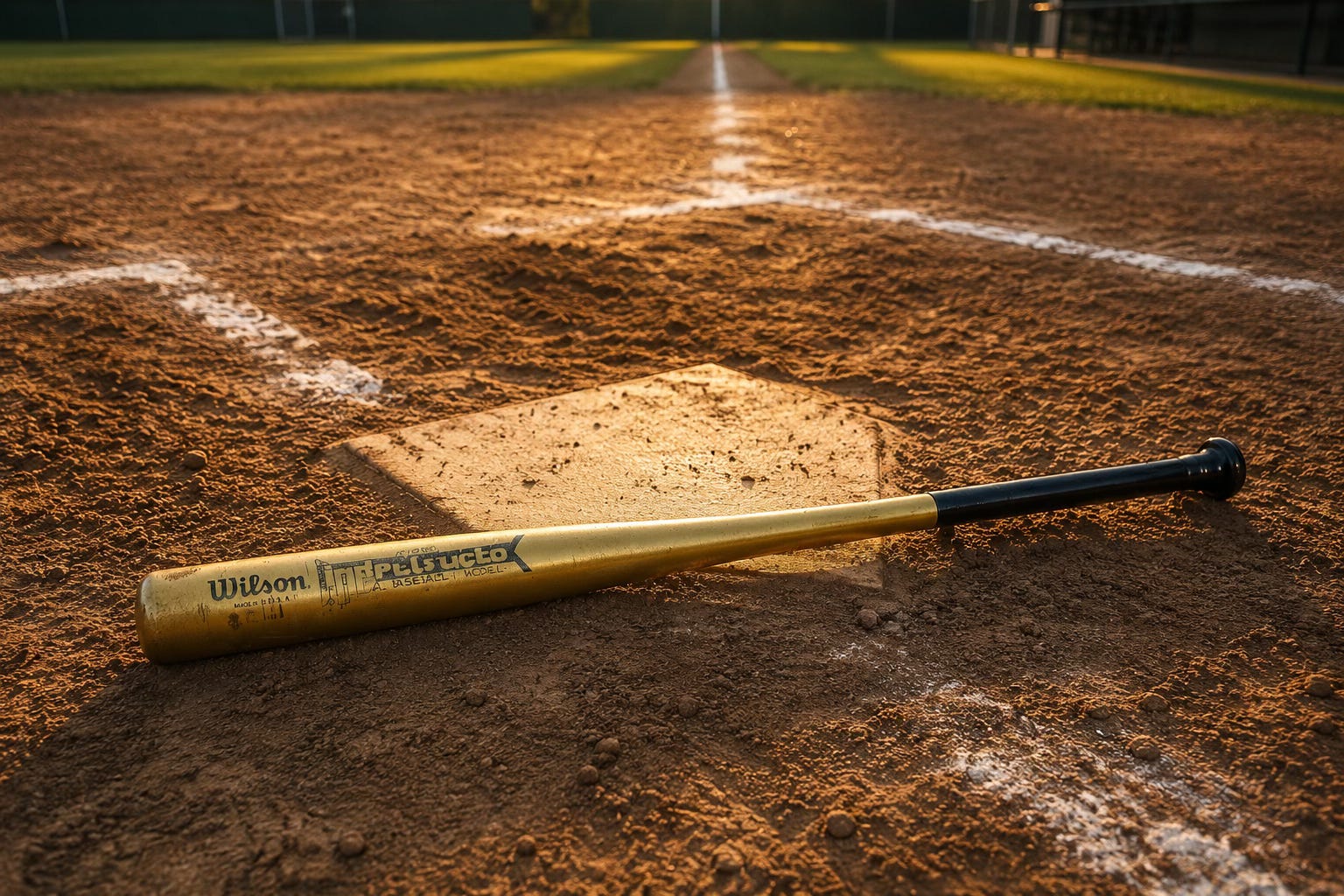
She gave me a gold aluminum baseball bat. They were pretty new then, and I’m not even sure why she got it—I wasn’t really playing anymore. But God, it was a great bat. I had it for a long time, until I’m pretty sure my mom sold it in a garage sale.
It could’ve been one of those small, quiet disappointments that sticks with you. But that bat washed most of it away. My mom had a great Mother’s Day, my sister had her graduation, and I learned something without realizing it: sometimes a single gesture is enough to carry a whole day.
Thanks for reading! This post is public so feel free to share it.
The Cake, the Candles, and the Lie We Still Believe
The whole birthday cake thing didn’t start with sugar and frosting and somebody singing off-key in your kitchen. It started with the Greeks—because of course it did—baking round honey cakes for Artemis. They lit candles on top to make the cakes glow like the moon. Not a party. A ritual. An offering. A little bit of superstition baked right in.
The Romans took a swing at birthdays themselves—mainly for men with status—and their “cakes” were more like dressed-up bread with honey and nuts. No wishes. No candles. No kids blowing spit across the top while everyone politely waits to eat it anyway. Just a marker: you made it another year.
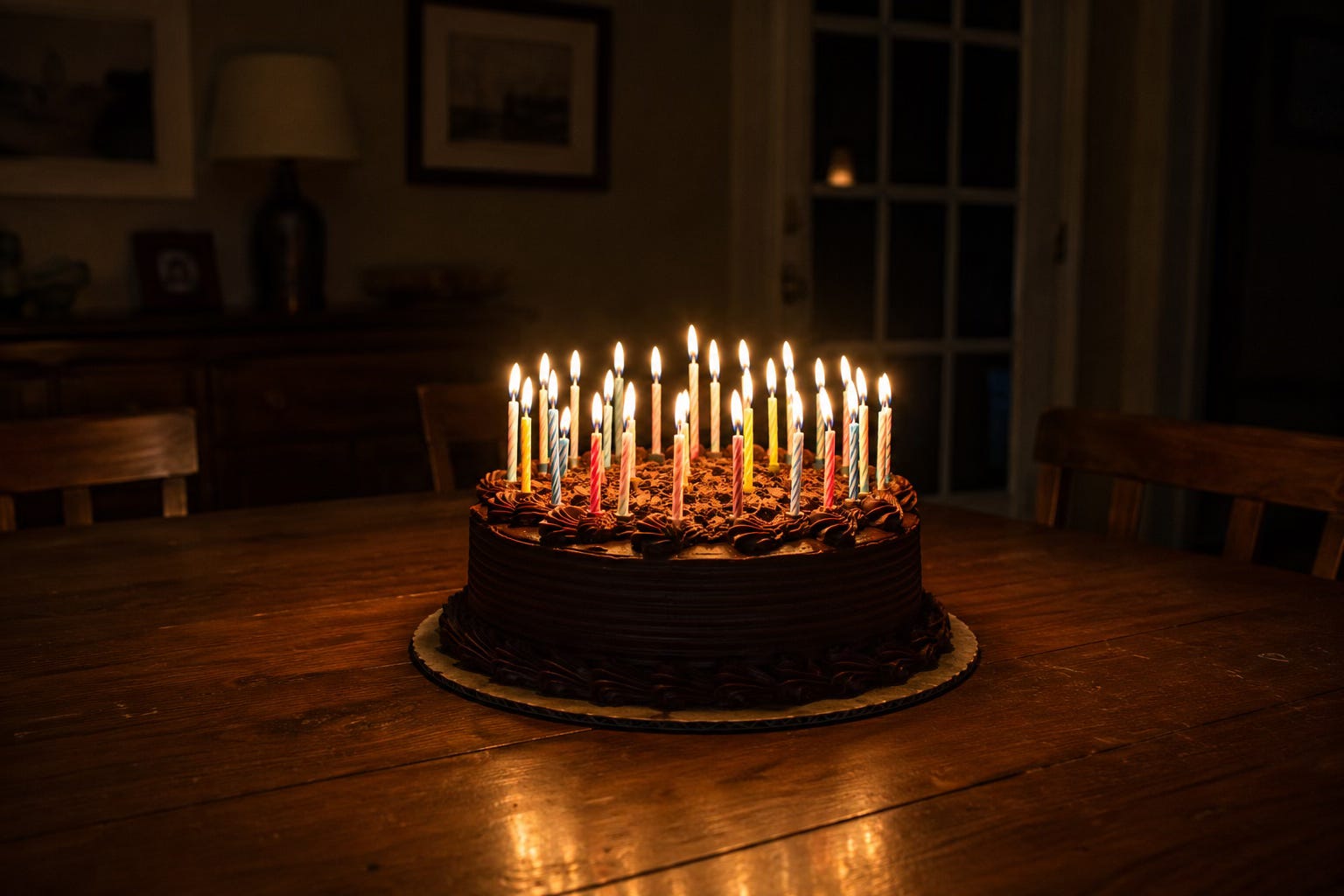
Then the Germans—quietly, efficiently—gave us the version we still use. Kinderfest. Eighteenth century. A cake for the kid. One candle for every year, plus one extra for luck. Let them burn all day. Blow them out at night. Make a wish. Don’t tell anyone what it is.
And that’s the part we’ve never let go of—the wish. Blow out the candles in one breath and somehow the smoke carries your hope upward, like it’s got a direct line to something listening. It’s nonsense, of course. Beautiful nonsense. The kind we keep because it feels right.
Think about it—we take fire, count our years, dim the lights, and ask for something we don’t say out loud.
Not bad for a piece of cake.
The Lousy Ones
We can all go there if we want to.
The birthdays where nobody showed up. The ones where the phone didn’t ring. The year you didn’t get a present—not even a bad one. The time you were sick. The time you had to work… and not just work, but two shifts. The game you planned your whole day around gets rained out. Or worse—something bigger steps in. A storm. A loss. A piece of news that wipes the whole thing clean off the calendar.
They happen. More than we like to admit. And maybe that’s part of it. Birthdays carry a little pressure—this idea that they’re supposed to be something. When they’re not, it sticks. But stack enough of those against a quiet one—a day like the one I just had—and the math changes.
No disaster. No disappointment. Just a day that moved the way it was supposed to. A few messages. A meal. A moment or two that felt normal.
And that, it turns out, is pretty damn good.
The Song That Owns Your Birthday
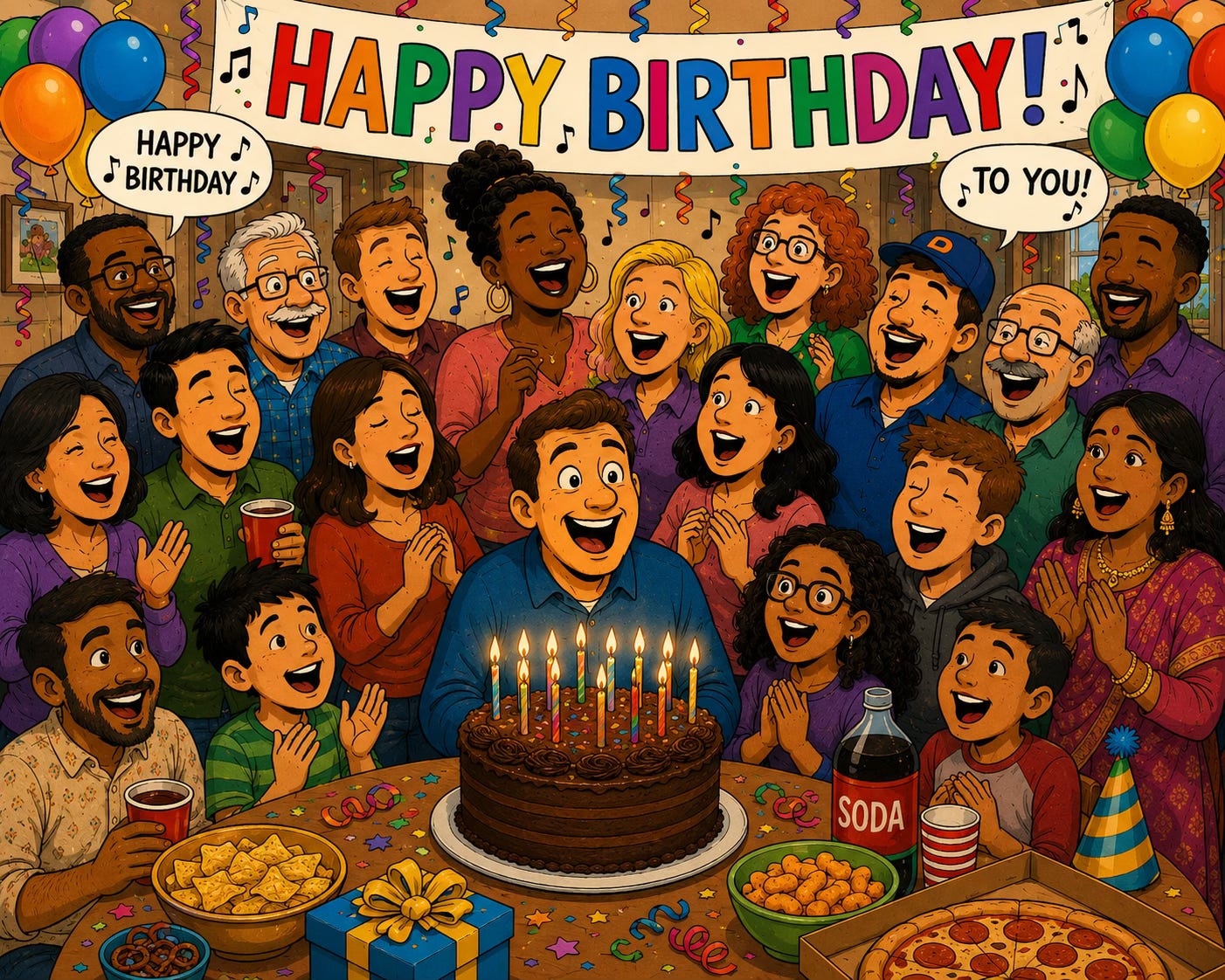
You’ve sung it a thousand times. Half the room comes in late, someone tries to harmonize, it speeds up for no reason, and by the end it’s barely holding together.
And for most of your life, it technically belonged to someone else.
“Happy Birthday to You” started as a classroom tune in the 1890s, written by sisters Patty Hill and Mildred J. Hill. The original song wasn’t even about birthdays—it was called “Good Morning to All.” Same melody. Different purpose. Kids singing to start the day.
Somewhere along the way, the lyrics shifted. The melody stuck. And the song spread—fast, easy, unforgettable. Then came the strange part.
For decades, the song was claimed under copyright by Warner/Chappell Music, which meant that technically, if you used it in a movie, a TV show, or anything commercial, you had to pay up. Millions of dollars changed hands over one of the simplest songs ever written.
Think about that. A song most people can barely sing in key… owned.
That finally ended in 2015, when a court ruled the copyright claim didn’t actually hold. Just like that, the song went back where it probably always belonged—everywhere.
And that’s why it still works. No rehearsal. No performance. No polish. Just a room—sometimes full, sometimes not—stumbling through the same few lines, year after year.
It’s not a great song. But once a year, it’s your song.
Still Your Day
Birthdays are... look, they don’t have to be big to matter. They don’t have to be perfect, or even particularly memorable. Most of them, if we’re being honest, blur together over time. But they mark something that’s easy to overlook in the middle of everything else—we’re still here. Another year in, another year through, whatever that year held.
And maybe that’s enough reason to pause, even just a little. A dinner. A game. A quiet day with a few messages from people who remembered. It doesn’t have to be more than that.
Because somewhere between the overlooked birthdays and the better ones, the loud ones and the quiet ones, there’s a simple truth: it’s your day. Even if only for a moment, it’s worth claiming it.
The Stallard Blurb is reader-supported. To receive new posts and support my work, consider becoming a free or paid subscriber.