
The Rhythm That Doesn’t Change
Refuge in a restless, reckless world: Baseball

The world feels loud right now—too loud, too fast, too fractured to make much sense of. Every headline pulls, every argument demands, every day seems to stack a little more weight on the next. It’s enough to make you forget there are still rhythms out there that don’t change, still places where time moves the way it’s supposed to.
Then you step outside.
The air is different. The light lingers a little longer. Grass pushes through, stubborn and green. And somewhere—maybe on a TV, a radio, maybe through an open window—you hear it: the quiet, familiar promise of baseball. Not as an escape exactly, but as a reminder. Nine innings. Chalk lines. Balls and strikes. A game that asks you to slow down, to watch, to wait.
To breathe.
So take a breath. Let the noise sit where it is for a while. Spring has come back around, just like it always does. And baseball—baseball!—is here again. What follows are a few poems I wrote for that space, where the world eases its grip and the game, simple and stubborn, carries on.
Where the Grass Still Grows
Long after the last out,
when the bleachers are empty,
when the scoreboards flicker out like tired stars,
baseball remains.
In the worn leather of a father’s glove,
in the chalk dust of a schoolyard field,
in the echo of a radio voice
rising from a kitchen window in July.
The heroes come and go—
Ruth’s shadow,
Robinson’s stride,
Gibson’s glare,
Paige’s laugh—
but the game is never gone.
A child bends to pick up a scuffed ball.
He throws it.
It arcs,
it spins,
it lands in another hand—
and the story begins again.
The grass grows back every spring.
It always does.
And with it comes the crack of wood on leather,
the hum of summer heat,
the soft chant of a crowd waiting for the next miracle.
Ballparks crumble,
seasons fade,
players turn to photographs on the wall.
But the game,
the game endures.
Wherever there is sun,
wherever there is dust,
wherever there is hope—
there is a diamond,
and there is baseball.
And when the lights go dark,
look closer.
Out there,
beneath the stars,
the grass still grows.
“Love is the most important thing in the world, but baseball is pretty good, too.”
- Yogi Berra
The Fields of Midnight Lightning
They played where they were told not to,
in shadows beyond the white lines drawn by men
who feared both the dark and the brilliance.
But brilliance cannot be fenced.
It skips across dusty diamonds in Kansas City,
it hums in Memphis,
it burns in Pittsburgh steel.
It rides a bus through small towns at dawn,
players stiff from sleep,
gloves worn soft as prayers,
bats rattling in the aisles like restless bones.
Satchel’s fastball was a rumor with teeth,
a ghost ball rising from smoke.
Some said it curved twice.
Some said it rose.
Satchel only grinned,
tossed another,
and let the myth do the rest.
Cool Papa ran like the wind was his twin.
He rounded bases before the crowd caught its breath,
sliding smooth into history,
leaving only dust behind.
Josh Gibson swung with thunder.
Every park was too small,
every fence too near.
They said he hit more balls out of stadiums
than men had words to count.
Some swore he touched the sky with his bat,
and the sky bent to listen.
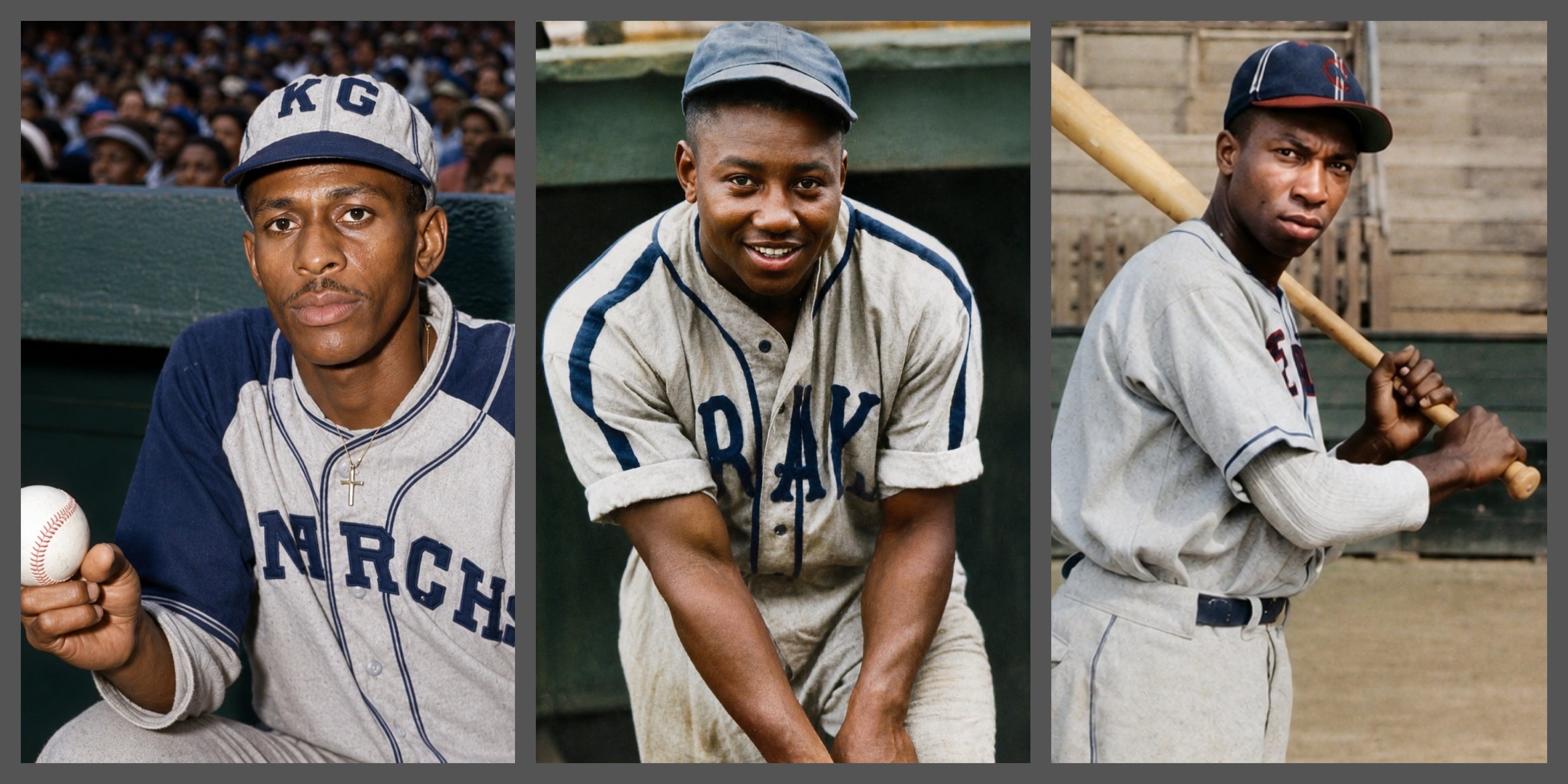
Crowds came not just to watch,
but to testify.
Horns from the bandstand,
hymns from the bleachers,
vendors shouting,
children chasing foul balls like promises.
The ballpark was a church,
the game a gospel,
and the players its living psalms.
Yet the box scores ran small.
The headlines ran silent.
And America told itself a lie—
that these men were less
than the game they mastered.
Still, under dim lights and broken bleachers,
they made the game new.
A double steal was jazz—
a riff passed from base to base.
A no-hitter was sermon—
fire and brimstone in nine chapters.
And every bus trip was pilgrimage,
through towns that cheered,
through towns that cursed,
through roads long as injustice.
And when at last the gates opened,
the majors swallowed the best of them—
but never the whole of them.
Too many names drifted into silence,
too many arms wore out before their time,
too many dreams folded into barnstorm buses
that rattled down midnight roads.
But listen—
the crack of that bat is still thunder.
The echo of that pitch is still fire.
And every field they touched
still carries the hum of lightning,
waiting for those who will hear.
For they were not shadows.
They were not side notes.
They were the game itself—
played faster, harder, sharper,
played with joy that defied chains.
And if you lean close,
on some summer night,
you can still hear them—
Satchel laughing,
Josh swinging,
Cool Papa flying—
their voices braided with the wind,
their ghosts dancing on the grass.
The Negro Leagues were never minor.
They were eternal.
And the fields they filled
will never be empty again.
Ode to Tee Ball Parents
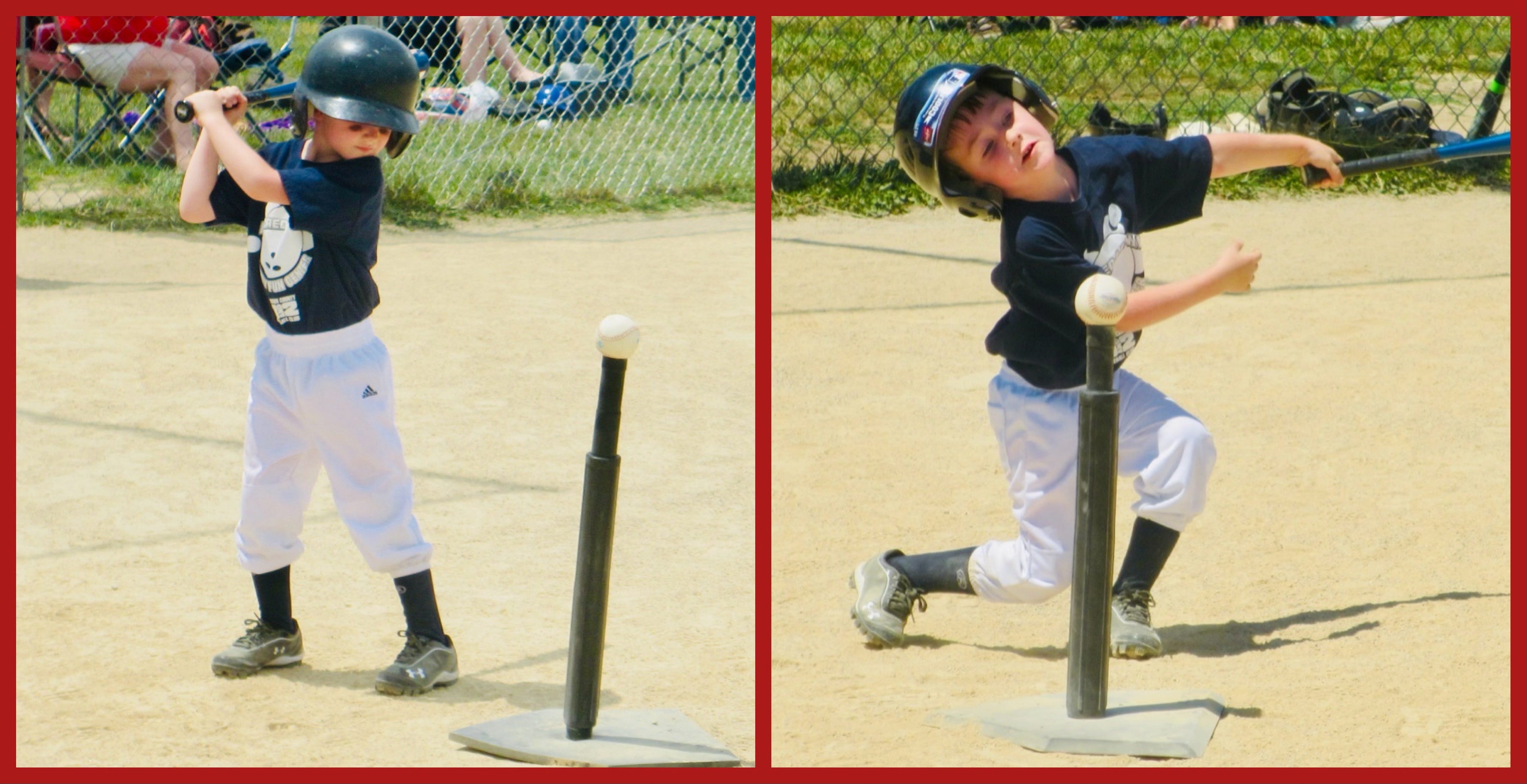
The ball sits still,
quiet on its rubber perch,
a planet waiting for orbit.
The batter—six years old—
adjusts his helmet (backward),
tightens his stance (crooked),
and takes a mighty swing …
whiff.
The tee wobbles,
the ball giggles and stays put.
From the dugout rail,
a chorus of parents:
“Good cut! Good try! Eye on the ball!”
Voices quaver between hope and command,
between memory and miracle.
At shortstop, a child digs a moat with his cleat.
In left field, another waves to the snack stand.
The pitcher—if you can call him that—
turns in slow circles,
searching the sky for dragons.
And still, the game goes on.
The ball rolls five feet,
three players chase it,
collide like puppies,
and one emerges triumphant,
holding the prize aloft as if it were destiny.
The throw sails ten feet wide,
the runner sprints anyway,
rounding bases like Odysseus home from sea.
The crowd erupts—
a dozen parents clapping,
cheering,
weeping in secret behind sunglasses.
For they know this is the start,
this mess of dirt and joy,
this tangle of rules half-learned,
this field where the heart takes root.
Tee ball is chaos,
tee ball is laughter,
tee ball is love wrapped in Velcro shoes.
And every parent,
though they do not say it,
sees a future in the stumble,
a legend in the swing,
a world of summers in the dust.
“Baseball’s very rhythms are those of poetry, acknowledging that if everything can change in a moment, then attention to those moments is an essential duty.”
- Levi Stahl
Rain Delay
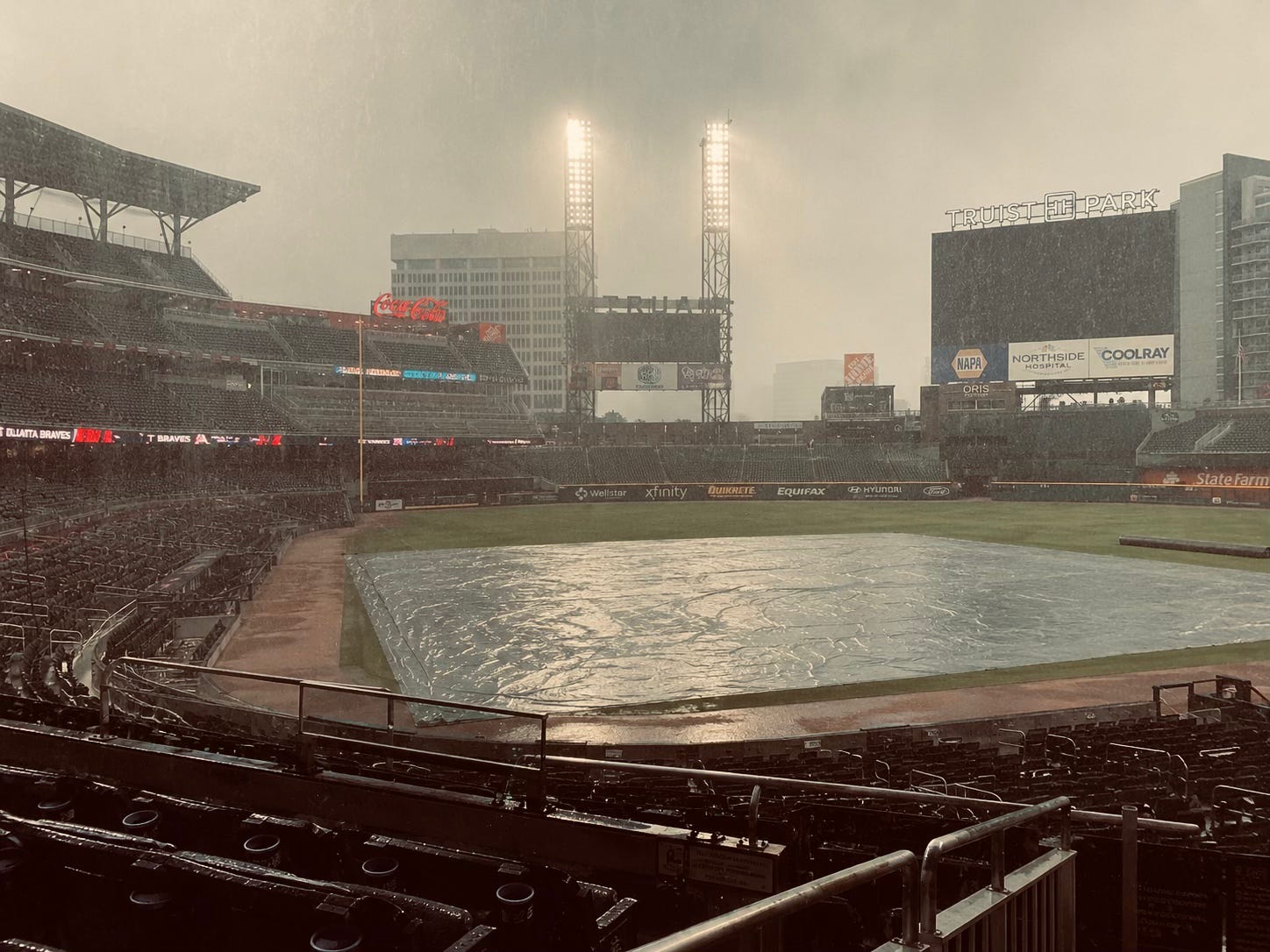
The sky folds in,
a gray tarp dragged across the sun.
Umpires huddle, wave arms,
grounds crew sprints like a pit crew—
plastic stretched over the diamond,
water pooling where the game once breathed.
Fans scatter to concourses,
hot dogs soggy, beer lines long,
kids splashing in puddles
as if the whole stadium turned into a playground.
A few diehards stay in ponchos,
clapping at thunder,
chanting for the crew pulling ropes through mud.
The players retreat—
some slouch in the clubhouse,
cards on the table,
pizza boxes stacked,
others ride the exercise bike like caged animals,
itching to throw, to swing,
to stop waiting.
Time bends strange in a rain delay.
Minutes stretch into innings,
innings into hours,
the scoreboard frozen,
the future on hold.
And yet—
there is beauty in the pause.
The diamond drinking deep,
the crowd humming like a restless hive,
the sudden democracy of waiting together.
Then the rain thins,
a rainbow hooks across the outfield fence,
the tarp comes off,
clay gleams like a polished brick,
and fans file back to their seats—
a little wetter, a little looser,
ready for baseball to begin again,
as if nothing had stopped,
as if the storm had only been
part of the show.
The Journeyman’s Last At-Bat
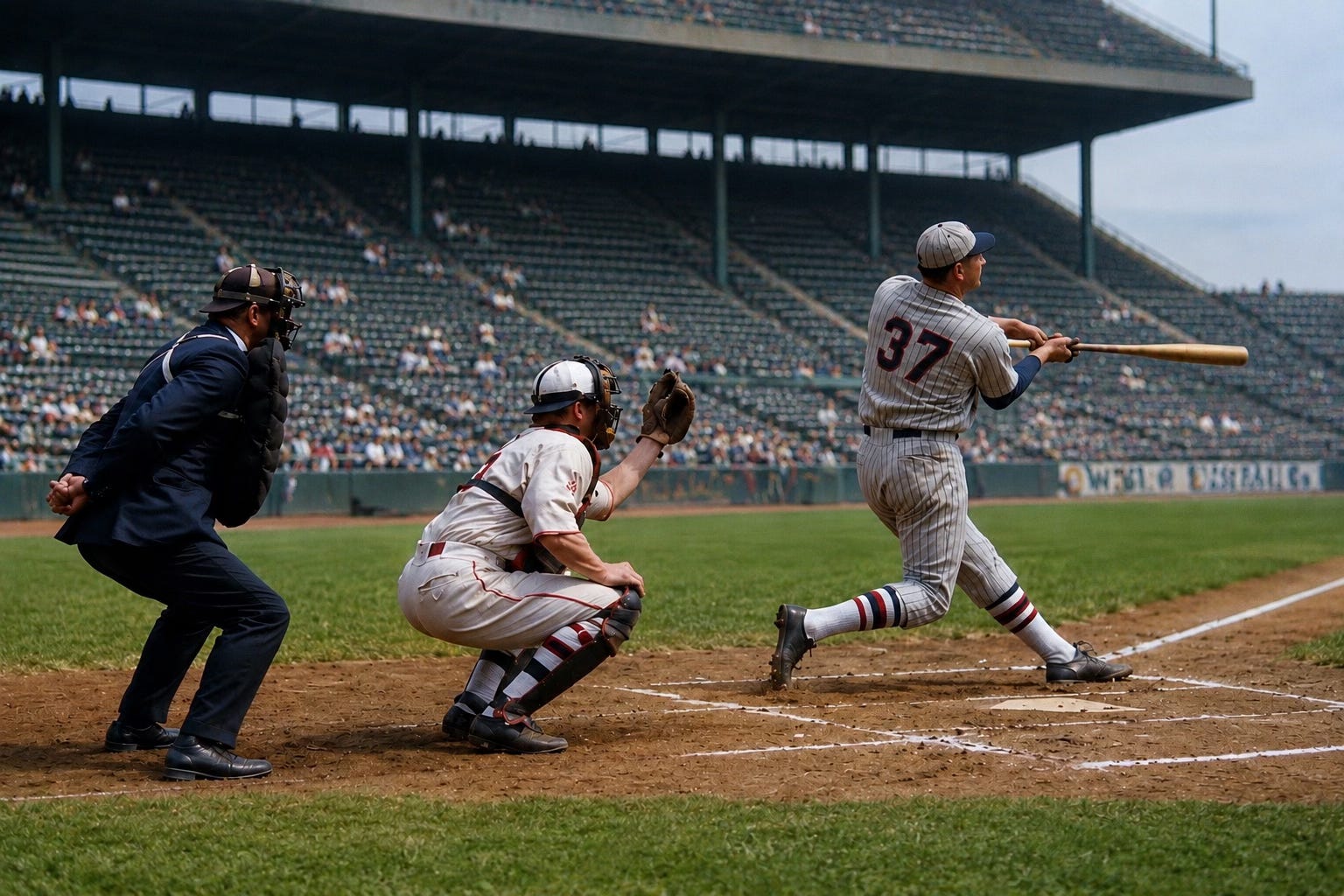
He steps in slow,
knees aching from long ago bus rides,
hands scarred from winters in mills and warehouses,
uniform stitched with more logos than memories.
He has been a Met, a Ranger,
a Mud Hen, a Redbird,
a name scribbled on lineup cards
like a spare part in a dusty garage.
The call-ups brief,
the demotions endless,
always packing, always leaving,
a bat in one hand,
rent overdue in the other.
The crowd hardly stirs—
just another pinch-hitter
in the late innings of a meaningless game.
But his teammates watch,
knowing this is it,
the final swing of a man
who never quit the game,
though the game quit him long ago.
First pitch—fastball,
he flinches, late.
Second pitch—curve,
he watches, too careful, too slow.
The count stacks against him,
as it always has.
And then—
a cutter drifts,
he throws everything left in him,
hips, shoulders, heart,
cracks it into the gap.
For one second he runs like a boy again,
dirt flying, lungs burning,
helmet rattling.
The ball is caught—
a diving snag in the alley.
The crowd claps politely.
The box score will say
0-for-1.
A career line: .218, 12 homers,
more strikeouts than hits.
But his dugout rises,
hats off,
because they know.
The fight was the point.
The years, the travel, the bruises—
all for moments like this,
when a man gives the last of himself
to the only thing
he ever truly loved.
’Til the Lights Go Dark
It begins in dust.
A ball wrapped in tape,
a stick for a bat,
bases marked by rocks and jackets.
Children chasing fly balls into the sun,
shadows stretching across chain-link,
arguing safe or out until darkness settles.
It grows on sandlots,
in Little League fields under buzzing lamps,
helmets too big,
numbers peeling from jerseys,
parents cheering as if the World Series
were hidden in every swing.
It grows into towns,
into Saturday afternoons,
radio voices drifting through open windows,
the crack of bat echoing off brick and steel.
The game stitching itself into the fabric
of farms and cities,
summers and memories.
It grows into cathedrals—
Fenway’s green wall,
Wrigley’s ivy,
Yankee Stadium roaring like thunder.
Heroes etched into the grain of bats,
legends carried in cheers that never fade.
And under lights,
it gleams.
Ninth innings,
October nights,
moments where breath itself holds still
until a pitch finds its fate.
The game, eternal,
because it belongs to all of us—
to the players, to the fans,
to the kids who still chase foul balls
as if they were treasure.
And when the lights go dark,
they never go out.
They live in the stories retold,
the box scores saved,
the gloves kept in closets long after.
Baseball does not end.
It only waits—
for the next first pitch,
the next echo of laughter,
the next cheer rising through night.
The lights may dim.
The stands may empty.
But the game—
our game—
burns on forever,
’til the lights go dark.
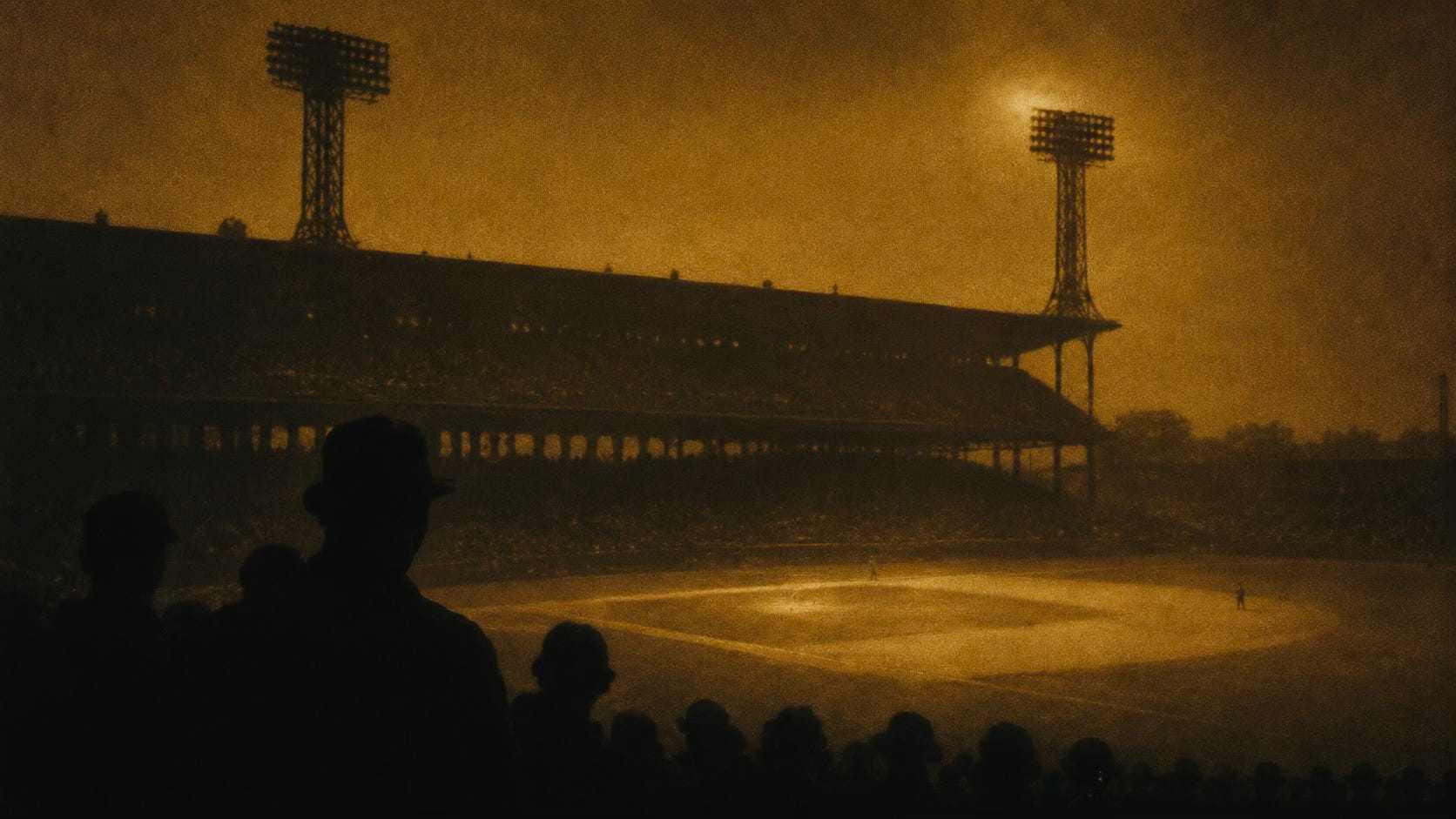
When the last line fades and the page runs out, the game will still be there—waiting, unbothered, ready for tomorrow. That’s the comfort of it. No matter how loud things get, there’s always another pitch, another inning, another night under the lights. If these poems found you, even for a minute, then they did their job. The rest belongs to the game.